
- Residential
Home Theater vs Media Room. What You Actually Want.
Details
Share this post
Not every family needs a dedicated home theater. Sometimes a great media room is the smarter call. Sometimes you need both. The difference between the two is real, and choosing the wrong one for your home and your life is the kind of decision that leaves you with a space you do not use as much as you thought you would.
Here is how to think through which one fits your situation.
What a Dedicated Home Theater Actually Is
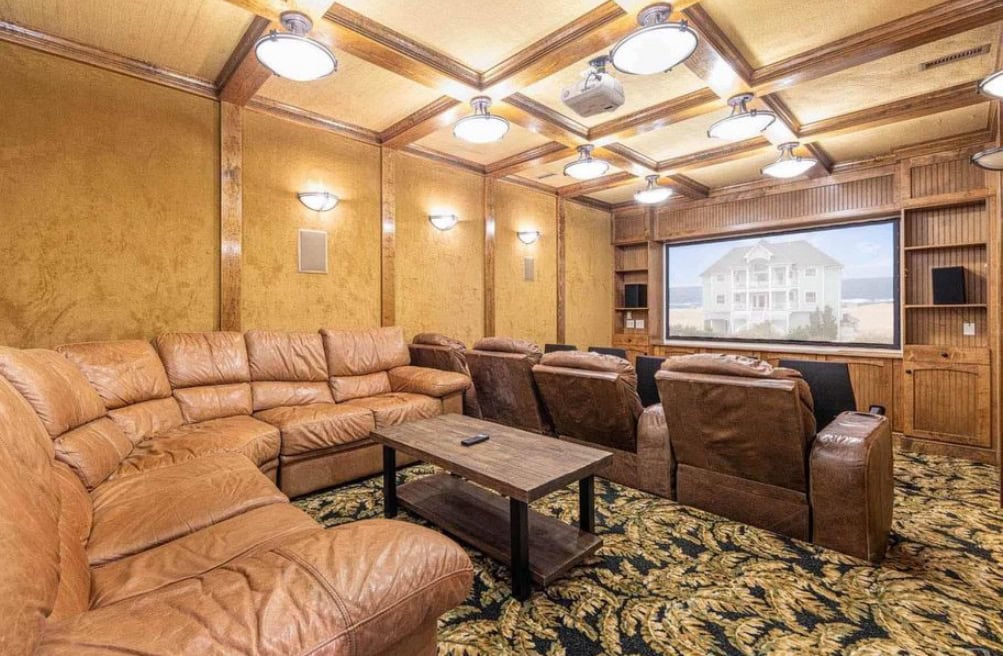
A dedicated home theater is a room designed for one purpose. Watching movies and shows. The lighting can be controlled completely. The walls and ceiling are treated for acoustics. The seating is purpose-built. The screen is sized for the room rather than the room being sized for the screen.
In a dedicated theater, the equipment is hidden. No clutter. No daylight to fight. No competing functions. Everything about the room exists to make the viewing experience as immersive as possible.
This is the experience people associate with high-end home theaters. It is also a significant commitment in terms of space, budget, and how the room gets used. A dedicated theater is rarely used for anything but watching content. If the family is not going to use that space regularly, it ends up being an expensive unused room.
What a Media Room Actually Is
A media room is the family room with serious AV. Large display. Good speakers. Comfortable seating. Lighting that can dim down when needed. But the room still functions for everything else. Kids doing homework. Friends coming over. Games during the day. Movies at night.
A media room is a more practical choice for most families. The space stays useful all day. The AV is excellent when you want it. The compromises are small and almost always worth it.
The Honest Tradeoffs
A dedicated theater will always deliver a better viewing experience than a media room. The room is built for it. The screen will be bigger relative to the seating. The audio will be better calibrated. The immersion will be deeper.
A media room will always be more flexible than a dedicated theater. It serves the family every day, not just on movie nights.
If you are choosing between the two, ask yourself how often you actually watch movies as a family. Once a week? More? Less? If movie night is a real ongoing tradition that the whole family participates in, a dedicated theater might be worth it. If movie night happens maybe once a month, a media room is probably the smarter call.
When to Build Both
If you have the space and the budget, building both is a real option. The dedicated theater for serious movie nights and entertaining. The media room as the everyday family space. Each space designed for its own purpose, neither one compromising for the other.
We work on plenty of homes that have this setup. It works well for families that genuinely use both spaces. It does not work for families that built both because they could afford to, then discovered they only use one.
The honest conversation about how the family actually lives is the most important conversation before any AV decision gets made.
Common Mistakes Either Way
Building a dedicated theater in a basement that nobody goes to. The room is great. The family never uses it. The investment is wasted.
Putting theater-quality equipment into a media room without addressing the room itself. The speakers are great. The display is great. The lighting fights everything because the room has six windows and no shades. The investment is wasted.
Sizing the screen wrong for the seating distance. Sizing the seating wrong for the screen. Both are common, both are uncomfortable.
Skipping the network design. Streaming is going to be the primary content source for most home theaters and media rooms. If the network cannot handle it, nothing else matters.
What to Do First
Walk through the way your family actually spends time in the evening. Where everyone gathers. How often a movie night actually happens. What the room is used for the other twenty-three hours of the day. The answer to what you should build is in those details, not in a magazine spread or a showroom demo.
Then have someone come look at the space. The dimensions, the lighting, the acoustics, the existing infrastructure. The room itself tells you a lot about what is possible and what is not.
option, designed correctly, becomes the room the family actually loves.
Related Posts
 Commercial
 Residential
Smart Home Mistakes That Make Life Harder
 Buyer Guides, Commercial